
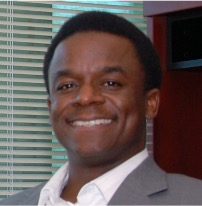
Jabari Lee remembers
Ashish and I met as graduate students at LSU some time between 1998 and 2000. He was pursuing a doctorate in computer science, I was in physics, but we were both graduate students in (what was known at the time as) the Concurrent Computing Laboratory for Materials Simulations (CCLMS) group, led by Profs. Vashishta, Kalia and Nakano.
Ashish was engaging and sociable. He brought people together. He would occasionally drop by our offices just to talk. He planned dinner outings for the group, suggested books, etc. I enjoyed exchanging ideas with Ashish and being introduced to a lot of tools, apps and other tech. I remember when we were organizing the 1st Computational Workshop for Underrepresented Groups (CSWUG) at LSU, and we needed a website. Ashish gave me a 1-day crash course in HTML that was very useful. I ended up being able to build the first two websites for CSWUG, and later on moving on to Flash, Java, PHP, JavaScript, OpenGL, and other web & mobile technologies. A lot of what I have been able to accomplish in my career, in and out of physics, has involved web & mobile technologies. I really appreciate Ashish, for giving me the initial push, direction and encouragement.
Ashish developed a custom software tool called “Atomsviewer” for visualizing longitudinal datasets generated from large-scale atomistic simulations. Atomsviewer was in use in-house for some time before it was formerly introduced in Ashish’s thesis, where it was described as crossing the 1-million atom threshold. This was an exceptional technical milestone in the late 90s, since there was no other code capable of rendering the large system sizes the CCLMS group was producing at that time. The CCLMS group relocated to USC around 2002, becoming the Collaboratory for Advanced Computing and Simulations (CACS). CACS research continued at USC, with system sizes exceeding 1-billion-atoms becoming increasingly routine. Atomsviewer’s robust design nevertheless continues to facilitate most, if not all, aspects of the CACS group’s molecular dynamics visualizations to date. Ashish’s contribution made it possible for me, along with so many other graduate students, postdocs and collaborators over the past two decades, to produce the graphics and animations we used in our theses, publications, presentations, websites, etc.
After his work with CACS at USC, Ashish went on to serve as faculty at Ohio State University and Emory University School of Medicine, where I understand he continued to be a major contributor, supporting scientific visualization efforts in bioinformatics and other areas.
I was deeply saddened to hear about my friend Ashish’s passing on January 27, 2023. He was diagnosed with glioblastoma on February 25, 2020, at a time when many of us were preoccupied with our respective challenges related to the pandemic. Unfortunately, many of us live long distances away from our friends and family, and were not able to see everyone we might have wanted to see face-to-face during this time, unless they were in close vicinity. I am sure however that Ashish’s solution-focused attitude, enduring character, and optimism were on display.
Ashish was also a humble person. He said that he never wanted to be put on a pedestal, but there is a lot to admire and appreciate about him, when giving credit where credit is due. Ashish has facilitated very significant contributions to science in my view, and I think many will agree, as this is something we are also striving to do.
He lives on through his work, his family, and our memories.